
Find Burnsville Resident Leads
Burnsville resident research works best when the starting fact determines the first search. An address belongs in Dakota County Property Information; a name connected to a court matter belongs in Minnesota Court Records Online, or MCRO; and an old household belongs in a dated telephone book, census index, or newspaper collection. Each source describes a role at a particular time. It may show an owner, a court party, a registered voter, or a printed listing, rather than a complete list of people at an address.
Keep a short record of the source, search date, and stable identifier. A parcel ID, case number, document number, or dated publication is more useful than a name alone. That discipline helps separate people with similar names and makes a later correction possible.
For Burnsville research, keep the Burnsville source label, Burnsville date, and Burnsville record number together. A clear Burnsville trail is easier to check than a list of names copied from unrelated systems.
- Standardize a known Burnsville address with USPS, then search the county parcel tool by address or Parcel ID.
- Save the parcel ID, legal description, municipality, and source date before comparing names.
- Use RecordEASE for recorded instruments and MCRO for a defined case, county, category, and date range.
- For a past household, test Burnsville and South Burnsville labels in the historical telephone-book finding aid and DCHS collections.
- Ask the custodian for a defined record or date range when the needed series is not online.
Note: A current parcel owner, a past directory listing, and a voter-status result can describe different dates and different roles.
Burnsville Resident Records Offices
Burnsville sits in Dakota County, so the county maintains the parcel and recorded-land layers that most often connect a name to a place. The State of Minnesota maintains the registration lookup and statewide court system. The City Clerk routes municipal records, including requests for older city material. The offices below are the proper starting points, not interchangeable copies of one master residents directory.
Burnsville and Dakota County Records
Property Taxation & Records
Dakota County, Minnesota
651-438-4597
Burnsville Parcel GIS
Property Information and map services
Dakota County, Minnesota
952-891-7081
Burnsville Election Status Route
Secretary of State registration route
Statewide service for Burnsville
651-215-1440
The Burnsville street directory follows the address and parcel trail in greater detail. City requests that do not fit a published portal can be routed through the Burnsville government and data-request information.
Burnsville municipal records, Burnsville county records, and Burnsville state records have separate custodians. Directing a Burnsville request to the right office can avoid an unnecessary delay or a search of the wrong record type.
Burnsville Parcel Records by Address
Free Dakota County Property Information accepts an address or Parcel ID. Address entries may use a full address or a portion beginning with the house number and street, while a PID works with or without dashes. Selecting a parcel opens the county panel, where the owner name and owner mailing address are distinct from the map location. The panel can also show municipality, tax description, school and watershed districts, tax information, building details, a printable property PDF, and available plat or tax-statement links.
| Burnsville search field | Street address or Parcel ID |
|---|---|
| Burnsville address behavior | Full or partial address beginning with house number and street; choose the suggested match. |
| Burnsville parcel result | Owner and mailing address, municipality, legal or tax description, tax and building tabs. |
| Burnsville map options | Parcel click, aerial and other layers, PDF printout, and available plat links. |
The county’s Property Information help describes recent-sales, Torrens, aerial, basemap, and other layers. New or pending parcels can be incomplete. A mailing address outside Burnsville is a correspondence field, not evidence that the owner lives elsewhere or at the parcel.
A Burnsville address, Burnsville PID, and Burnsville legal description should be retained as separate fields. Those Burnsville details provide the best bridge between a current property card and a recorded instrument.
Burnsville Deed Records and Parcels
After the parcel tool supplies a PID and legal description, Dakota County’s recording system supplies the instrument trail. The county records deeds, mortgages, liens, and related instruments in both Abstract and Torrens systems, with most county property identified as Abstract. RecordEASE is the county’s portal for the recorder index and document access. Its Abstract computer index is described as reaching back to July 8, 1993; historical completeness still depends on the parcel, document type, and indexing history.
A useful sequence is address to PID, PID to legal description, then current deed to the earlier grantor. Confirm the legal description at every step before treating two names as part of one chain. The county reported a completed effort to image and index roughly 1.6 million pre-1995 documents in 2021, which expands access but does not promise that each historical instrument is equally searchable.
- Parcel ID
- A county identifier for a particular parcel. It is stronger than a street label when lots are split or combined.
- Legal description
- The plat, lot, block, tract, or other description used to identify land in an instrument.
- Grantor and grantee
- The party transferring an interest and the party receiving it in a recorded instrument.
- Abstract and Torrens
- Minnesota land-record systems with different title treatment; the county map layer can help identify the system.
RecordEASE requires an account for its available occasional-user or paid access options. The Dakota County fee schedule is the source for current portal and copy charges. A defined public-data request remains an option when an identified county record is not exposed online.
Burnsville deed research remains strongest when every Burnsville instrument is tied back to the same Burnsville legal description. The Burnsville address is helpful, but it can change while the land description remains the steadier key.
Burnsville Resident Court Searches
MCRO is Minnesota’s statewide district-court access point for a Burnsville or Dakota County case lead. Its Case Search has Name, Case Number, Citation Number, and Attorney routes. A name search can be narrowed with last, first, and middle name, exact-name or trailing-wildcard behavior, Sounds Like, date of birth, filed-date range, category, status, and a Dakota County filter. A result can identify a case number, court, parties, category, filing date, status, register of actions, and available documents.
MCRO Case Search is an index lead, not an identity conclusion. Match a party role, date, county, and case number before relying on it. Protected domestic-abuse, juvenile, civil-commitment, sealed, and other restricted material may not appear online. Minnesota district courthouses offer public terminals, and court administration or paper records can be the fallback for unavailable material.
The MCRO Case Search form shown here has the name, case, citation, and attorney search entry points used for a focused Burnsville records search.
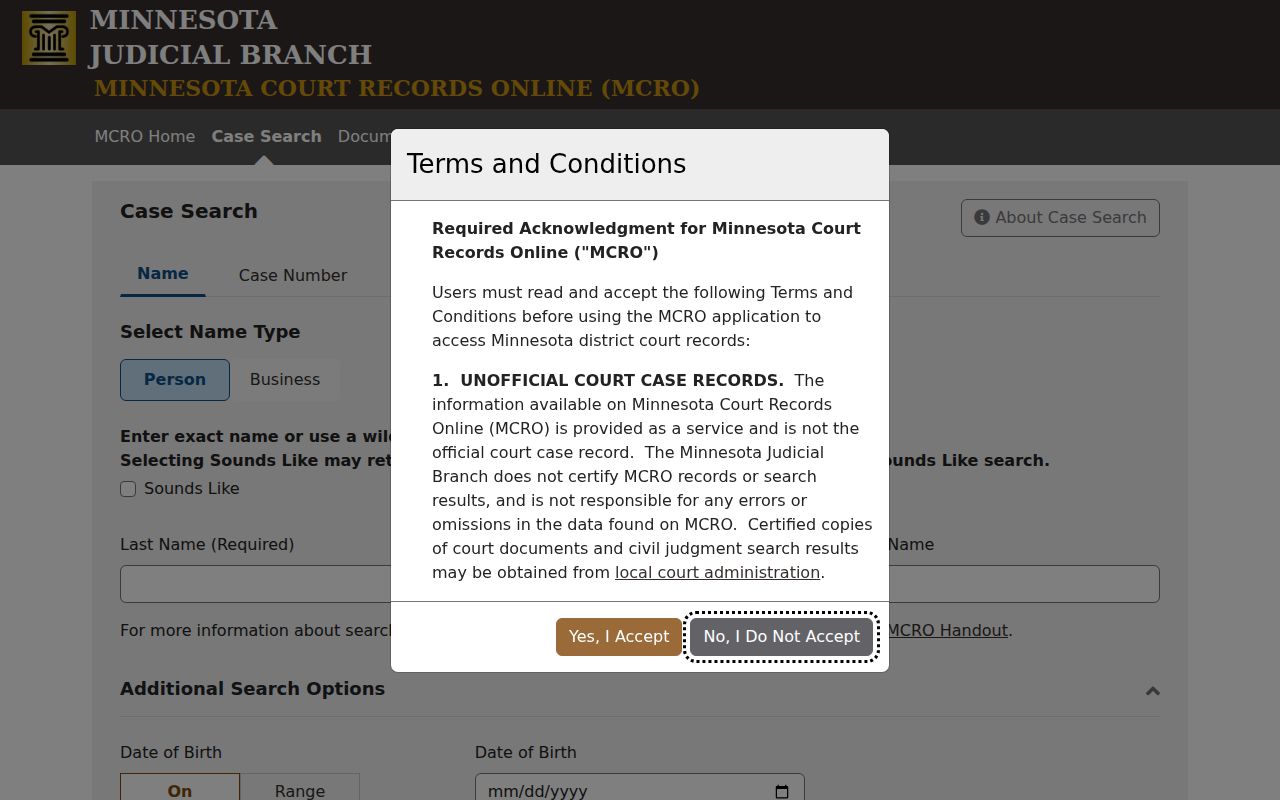
Use the county and date controls to keep a same-name search narrow, then preserve the case number for Document Search or a copy request.
Current custody is a separate question. The Dakota County Jail inmate search accepts last name, first name, posted-date range, or court date and reports current custody only. It is not a complete personal history.
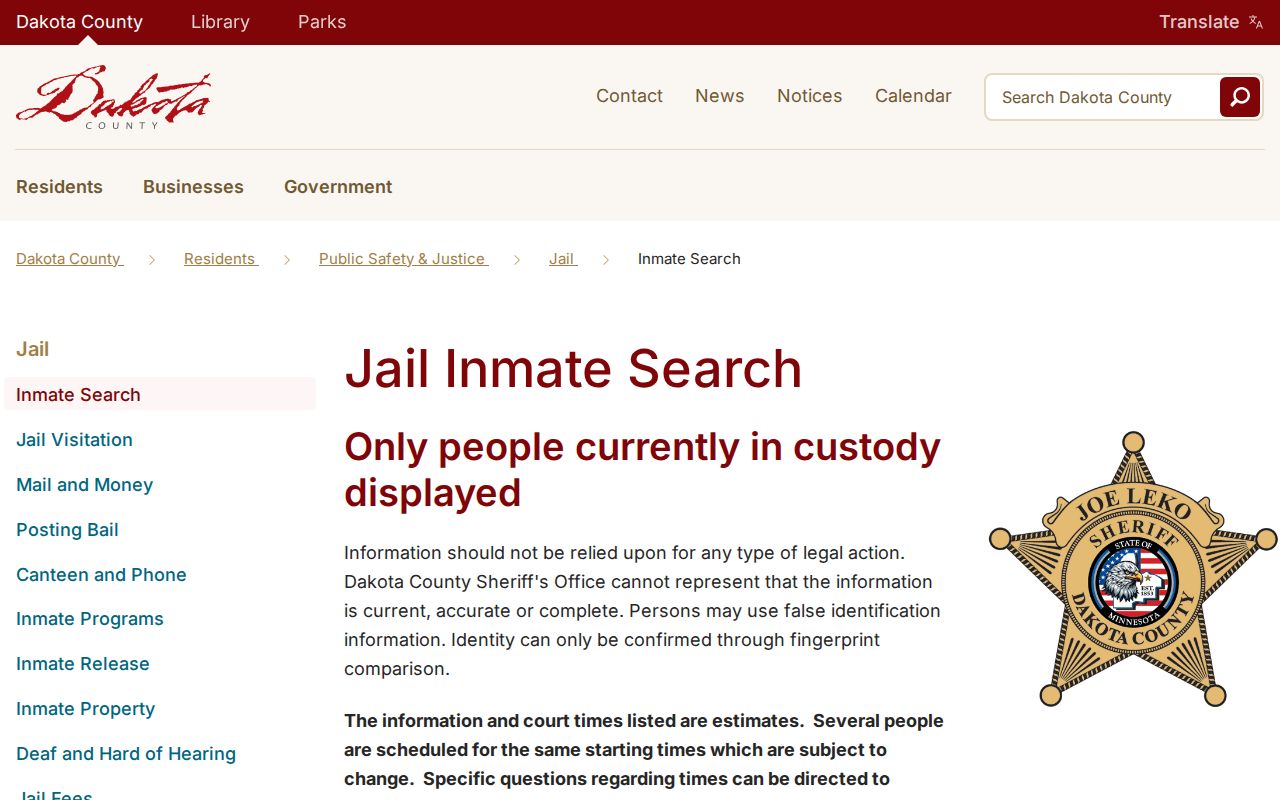
An empty custody result can reflect a release, transfer, spelling difference, timing issue, or a record outside the county. The county warns that the display may not be current, accurate, or complete.
For a Burnsville court or custody question, preserve the Burnsville source date, Burnsville county filter, and Burnsville case identifier where one exists. A Burnsville search result needs that context before it can be compared with any other record.
Current Burnsville Resident Sources
There is no official general Burnsville resident directory. Instead, each current source has a narrow purpose and date. The parcel card is most useful for assessment ownership fields, MNVotes is for a registration-status check, RecordEASE lists parties to instruments, and the city staff directory lists public employees. Historical sources fit a different time frame and should not be relabeled as current evidence.
| Burnsville source | Burnsville record role | Burnsville custodian | Burnsville access boundary |
|---|---|---|---|
| Burnsville Property Information | Parcel owner and mailing fields | Dakota County GIS | Free address or PID search; not occupancy proof |
| Burnsville MNVotes check | Registration match or status | Minnesota Secretary of State | Name, birth information, and address route; not a resident list |
| Burnsville RecordEASE trail | Parties to recorded instruments | Dakota County Property Taxation & Records | Account and available paid access; document coverage varies |
| Burnsville city staff directory | Public-facing municipal staff contacts | City of Burnsville | Free online staff and department directory |
| Burnsville license and entity indexes | Public credential or organization data | Minnesota agencies | Use the state system for its defined license or filing record |
For one person rather than a source comparison, the Burnsville resident lookup uses independent identifiers to test a narrow record claim. Commercial compiled profiles can be stale or merge people with the same name, so official custodians are the evidence layer.
Burnsville source choices also depend on the date at issue. A current Burnsville property record, a historical Burnsville listing, and a Burnsville court index should be read as separate, dated records rather than combined into one profile.
Burnsville Voter Status Limits
The Minnesota Secretary of State’s MNVotes tool checks registration using first and last name, birth information, and either a ZIP or county route. The ZIP route continues through city or township, house number, street, and an optional unit that may be needed for a matching registration. The page says its data are updated nightly and that an application may take up to 14 days to appear.
Public voter-information fields are limited by Minnesota Statutes section 201.091. They include name, address, year of birth, voting history, districts, and a telephone number if supplied. Full date of birth and government numbers are not public list fields. A public-file request has its own requester certification, county-auditor routing, and use limits. Registration status does not establish occupancy or continuous residence.
The official MNVotes lookup illustrates the address and identity details used to check a specific registration status.
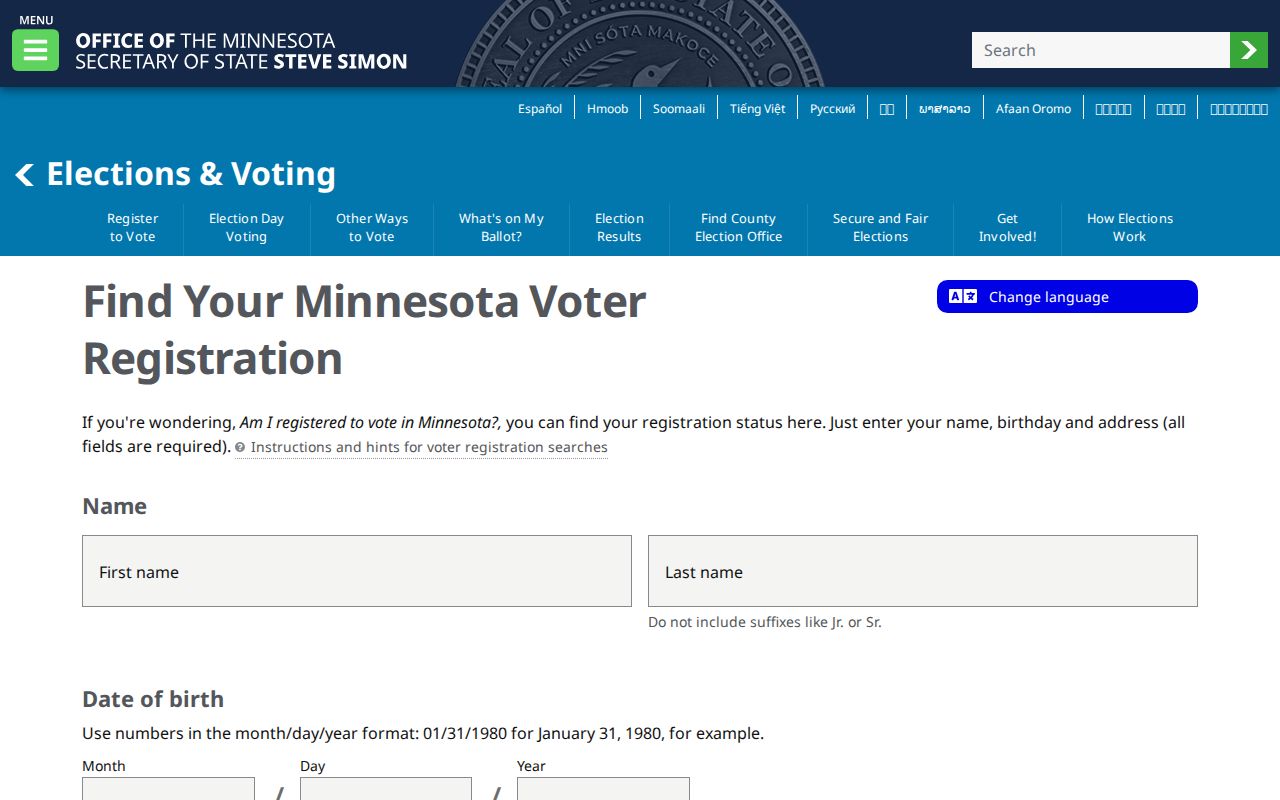
Safe at Home participants have a substitute post-office-box address and protected true address. A nonmatch can result from a unit, spelling, timing, or protected-status issue, so it should never be used to expose or reconstruct an address.
Burnsville registration results are a narrow Burnsville status check, not a Burnsville household list. The state’s protected-address rules remain part of every Burnsville voter-record search.
Burnsville License Record Checks
When a Burnsville question concerns a public credential or an organization, use the state record designed for that category rather than treating a person name as a complete identity key. The Secretary of State Business Search can be narrowed by business name or file number, begins-with or contains behavior, filing status, and prior-name inclusion. State license systems publish different field sets, coverage, and status meanings.
The Minnesota Secretary of State Business Search is shown below. Its result can lead to filing history and a document-copy order, while a matching business name alone does not show a person’s present location or role.
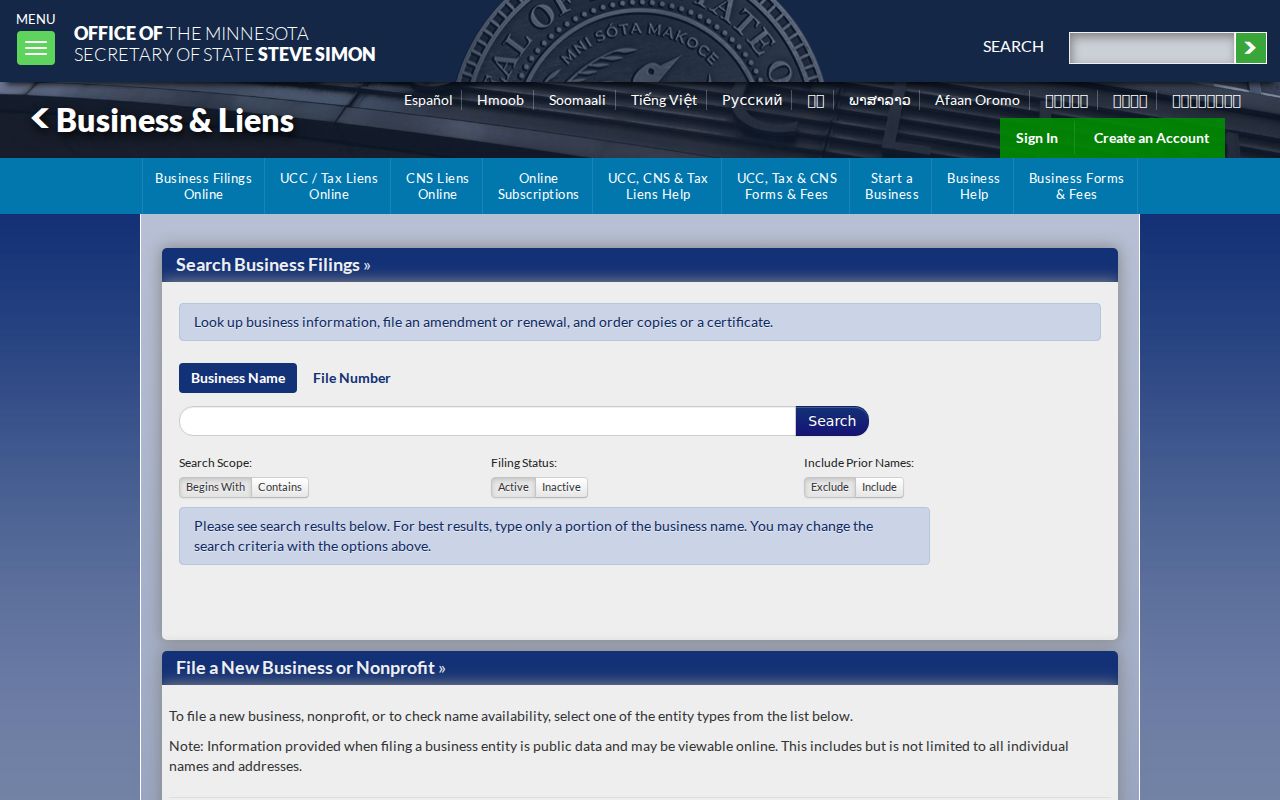
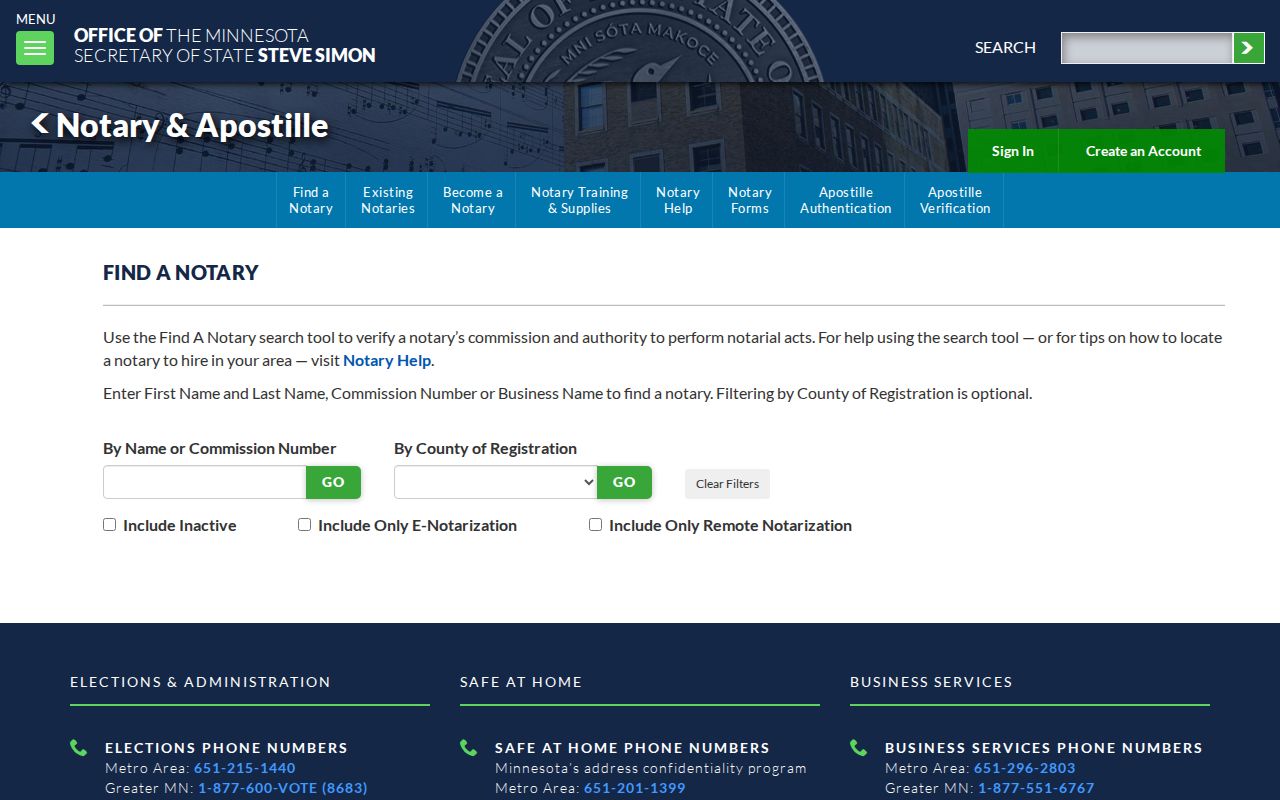
Minnesota’s notary search offers name, commission, business, county, inactive, electronic, and remote-notary filters. It verifies a public commission record, not a signer’s identity or address.
Note: Record a license or file number and its source date before joining it to a separate court, parcel, or historical record.
Burnsville credential research should keep a Burnsville query separate from a Burnsville address claim. A Burnsville license or entity record can confirm its own status without confirming a Burnsville personal residence.
Burnsville ZIP and Parcel Geography
Burnsville’s official city and county ZIP entries are 55306 and 55337, according to the Minnesota DPS county and ZIP list. That is useful orientation, but ZIP is not a city boundary, neighborhood boundary, legal boundary, or identity key. The county ZIP map is a geographic aid and warns that it is not a legal survey or recorded boundary.
Use USPS ZIP Code Lookup for a specific address. Its by-address route takes street address, city, state, and optional unit or ZIP; it standardizes postal formatting. Census ZCTAs may place Burnsville in a broader statistical context that includes 55044, 55306, and 55337, but a ZCTA does not assign a mailing ZIP to an individual address.
| Burnsville geographic label | Burnsville best use | What it cannot settle |
|---|---|---|
| Burnsville USPS delivery ZIP | Standardize one address | Current resident identity or city boundary |
| Burnsville county ZIP map | Orient a parcel in county geography | Legal boundary or ZIP+4 coverage |
| Burnsville Parcel ID and legal description | Join assessment and recorded-land records | Historical household membership |
| Burnsville Census ZCTA | Aggregate statistical context | Postal assignment for a specific address |
A Burnsville ZIP result, Burnsville parcel ID, and Burnsville street form answer different geographic questions. Use the Burnsville postal result for delivery formatting and the Burnsville parcel record for land-record joins.
Historical Burnsville Resident Directories
For an older Burnsville household, telephone books, census material, newspapers, yearbooks, and local-history files offer a dated trail that the modern parcel card cannot. The Minnesota Historical Society finding aid locates Burnsville telephone books for 1964 and 1966 through 2009, 2010 yellow-pages-only, and regular and yellow-pages entries for 2011. It also separates South Burnsville entries for 1983 through 1996.
The separate South Burnsville label is an indexing quirk, not proof of a separate city. A listing may omit an unlisted number, use a spelling variation, appear only in a business or yellow-pages volume, or reflect the publication schedule rather than a full year of residence. The fuller collection and reading method belong on the Burnsville city directory page.
Burnsville historical searches should test Burnsville and South Burnsville as collection labels. The resulting Burnsville volume year and Burnsville page or shelf reference are essential parts of a careful citation.
Burnsville Historical Household Trails
Dakota County Historical Society is the local bridge between names, places, and older records. Its Lawshe Memorial Museum collections include newspaper microfilm from the 1850s, census material from 1849 through 1940, cemetery and obituary files, church and naturalization records, plats with ownership from 1879 forward, photographs, oral histories, telephone books, and city or township files. Its searchable collections include more than 500,000 church, cemetery, and census records.
Historical labels need extra care in Burnsville. The city was incorporated in 1964, and Municipal Board materials include incorporation and annexation files from 1959 through 1973. An older record can use township or neighboring-place language even when it concerns the area now called Burnsville. Search the source’s original place label alongside the modern name before deciding that a result is unrelated.
MNHS also offers a paid city-directory or telephone-book staff search for one person or business in up to five years. The published prices are $10 for city directories, $10 for telephone books, and $20 for both, with a typical three-to-four-week process that can sometimes take longer.
Burnsville incorporation and boundary records can clarify a Burnsville historical place label that seems unfamiliar today. Keep the Burnsville date, Burnsville township or city wording, and Burnsville source collection together while comparing evidence.
Burnsville Privacy for Record Searches
Minnesota’s Government Data Practices Act starts with a presumption that government data are public unless classified otherwise, but the limit is record-specific. Inspection of public data is free, while copies may have charges. A focused request should identify the office, record type, date range, Burnsville address, PID, case number, or other narrowing detail, along with a preferred format.
Some data remain protected even when a related search tool is public. Court systems exclude confidential and sealed material, vital-record products have eligibility rules, voter data have use limits, DVS data have their own classifications, and Safe at Home protects a participant’s true address. For a private controller rather than a government custodian, the Minnesota Consumer Data Privacy Act supplies access, correction, deletion, portability, and defined opt-out rights subject to its terms and exclusions.
| Burnsville official record route | Burnsville commercial compiled profile |
|---|---|
| Names a custodian, record type, and date | May combine source fragments with different dates |
| Has a stated access rule or request path | May have a private correction or opt-out process |
| Supports a narrow, cited record claim | Can produce stale or same-name errors that need independent verification |
Keep protected identifiers, full dates of birth, signatures, account numbers, and protected addresses out of a public handoff. If a private controller does not answer a valid privacy request after its own process, the Minnesota Attorney General privacy complaint route is available.
Burnsville record research still requires a Burnsville privacy screen before sharing any result. A Burnsville public source can contain a restricted field, and a Burnsville historical source can still need careful, date-aware handling.